Key Concepts:
- How were galaxies discovered?
- What types of galaxies ("Hubble types") are there? What characteristics distinguish them?
- Redshift: what is it? how is it determined?
- How do you measure distances to galaxies?
- Hubble Law: what is it? what does it tell us?
- How do you weigh a galaxy?
Discovery of Galaxies
 |
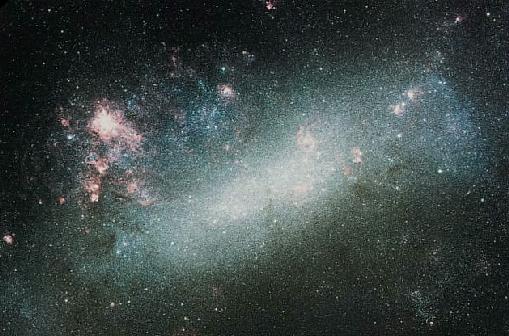 |
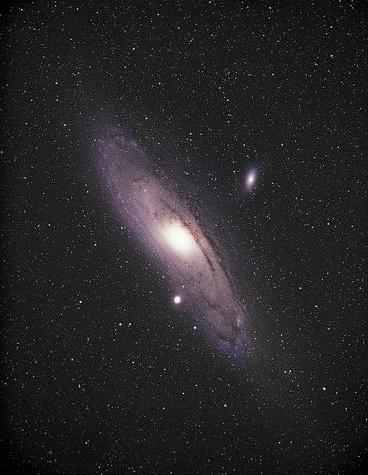
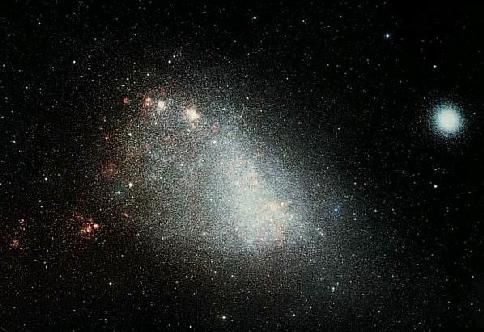
- visible by naked eyes: SMC, LMC, The Andromeda
- Charles Messier (1730-1817): comet hunter
- Sir William Herschel (1738-1822): the New General Catalog (NGC)
- The Shapley-Curtis Debate in 1920: The Scale of the Universe
Zoology of Galaxies (Hubble Types)
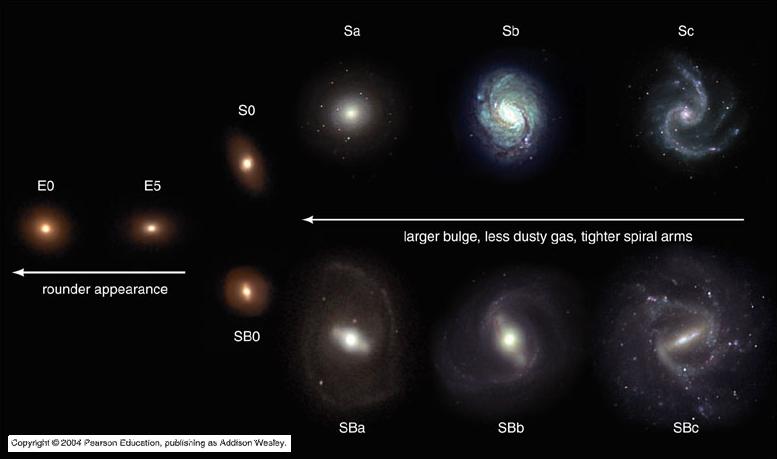
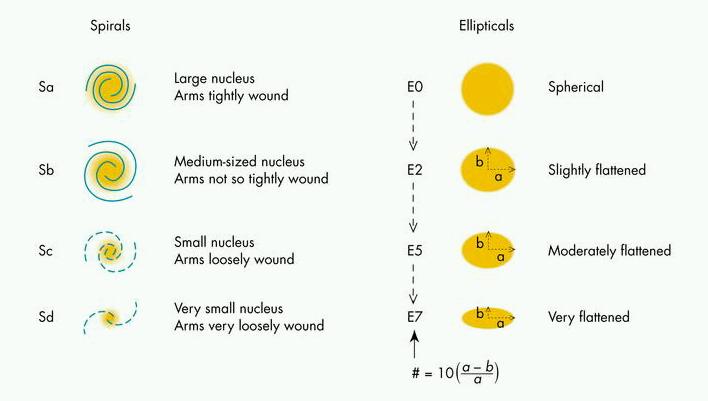
- Ellipticals: galaxies of general elliptical shape and smooth featureless appearance (E, SO, cD)
- Spirals: galaxies with two or more arms winding out of the center (barred vs. unbarred)
- Irregulars: galaxies of irregular appearance with random bright patches
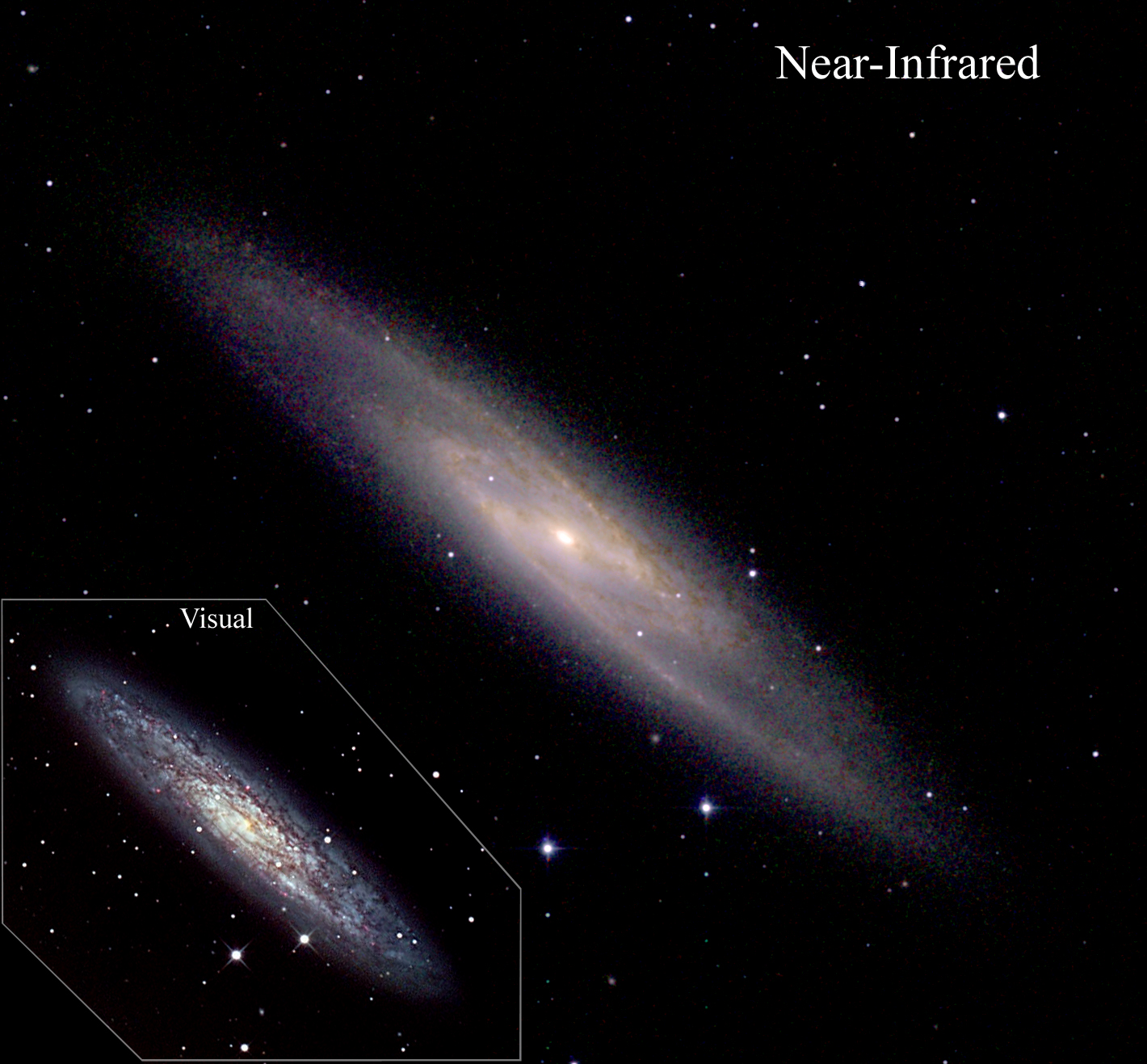
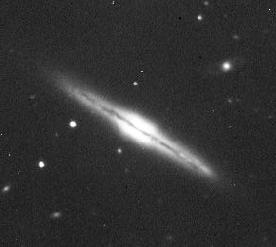
- Also depends on the observed wavelength (e.g. NGC 253 in optical vs. near infrared)
Anglo-Australian Observatory (AAO) Galaxy Images
Hubble Heritage Images
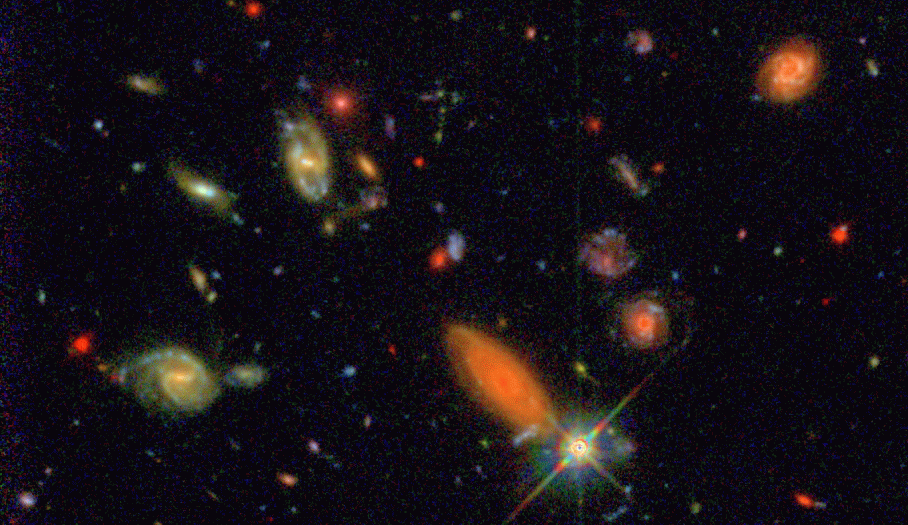
The GEMS HST Images of Galaxies
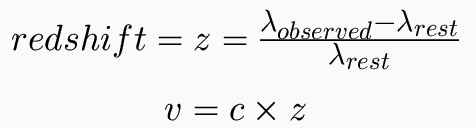
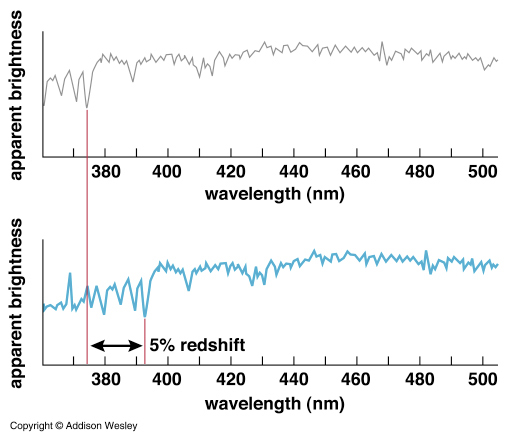
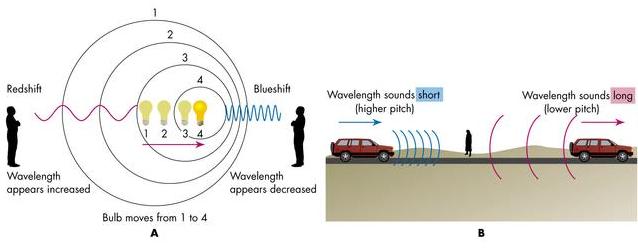
Redshift and Velocity (using Doppler Effect)Spectral line from a light source shifts in wavelength with motion:
 Quiz 19a |
 |
Measuring Distances to Galaxies
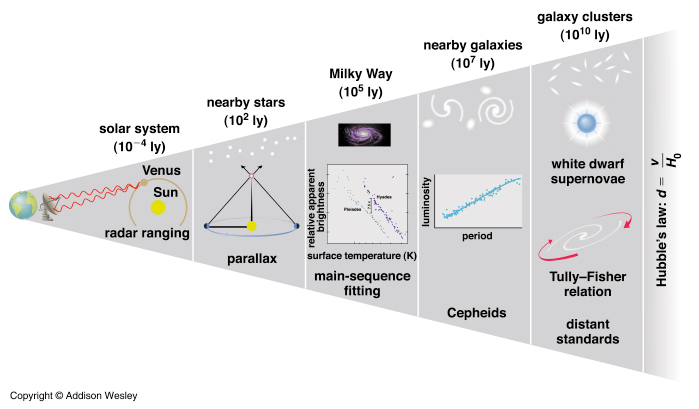
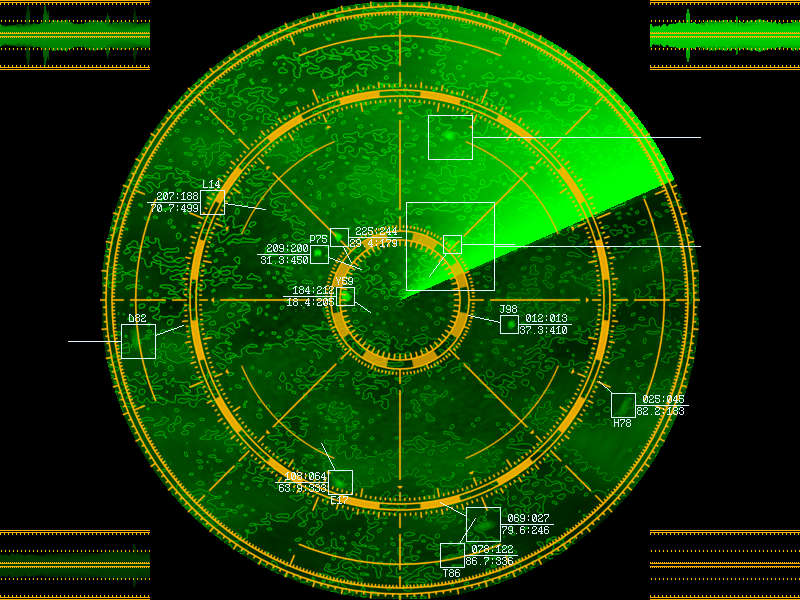
- Radar Measurements
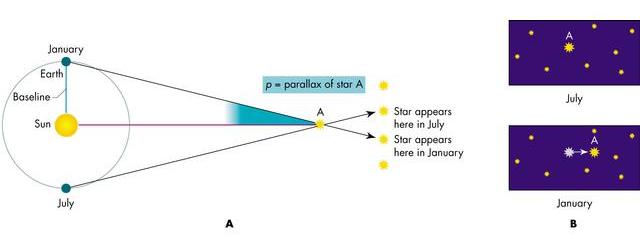
- Stellar Parallax
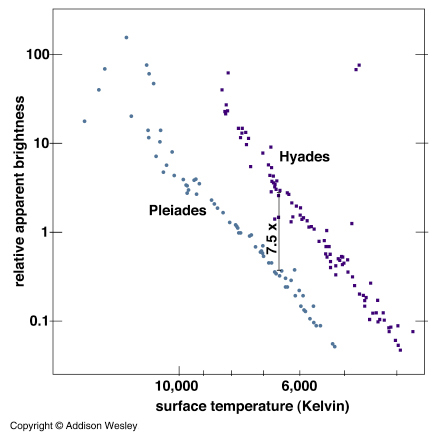
- Main Sequence Fitting
- Standard Candles
- variable stars (Cepheids)
- white dwarf ("type Ib") supernova
- Tully-Fisher (mass-velocity) relation
- brightness fluctuation method
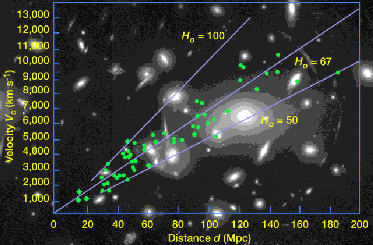
Hubble's LawIn 1920,
Edwin Hubble discovered that more distant galaxies
have larger recession velocities, following the relation
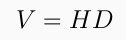 The constant H that relates the recession speed V and distance
D is refereed to as the Hubble constant.
Turning this around, one can infer the distance of a galaxy
with measured recession speed V as D = V/H. For the recession
velocity in km/s, H = 72
gives D in megaparsecs (Mpc; million parsecs).
A crude age estimate of the universe
can be derived as t = D/V = 1/H.
Such a calculation suggests the age of universe between 12 and 15
billion years. Quiz 19b |
 |
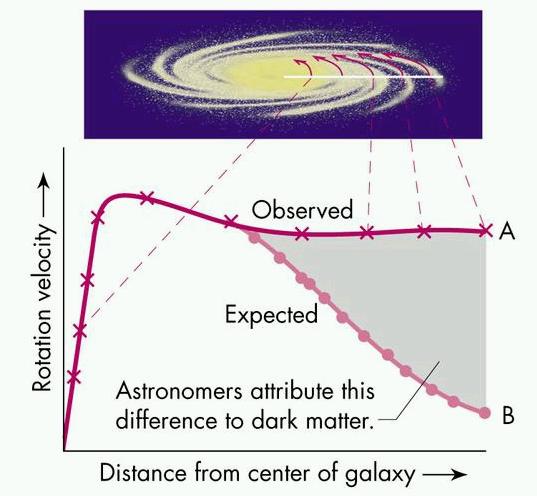
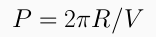
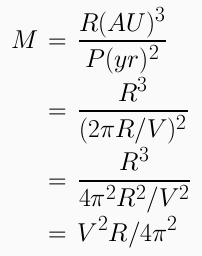
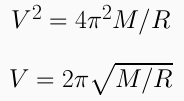
Weighing Galaxies: Dynamical Mass
 |
|
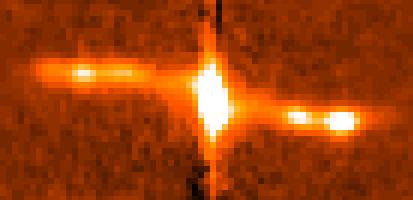
Rotation curve data for an edge-on spiral in the Coma cluster (obtained by
N. Vogt (NMSU) using the Palomar 5m telescope):
 |
 |